
From Painful Nights to Shuffled Cards: A New Path to Osteoarthritis Relief
April 09, 2026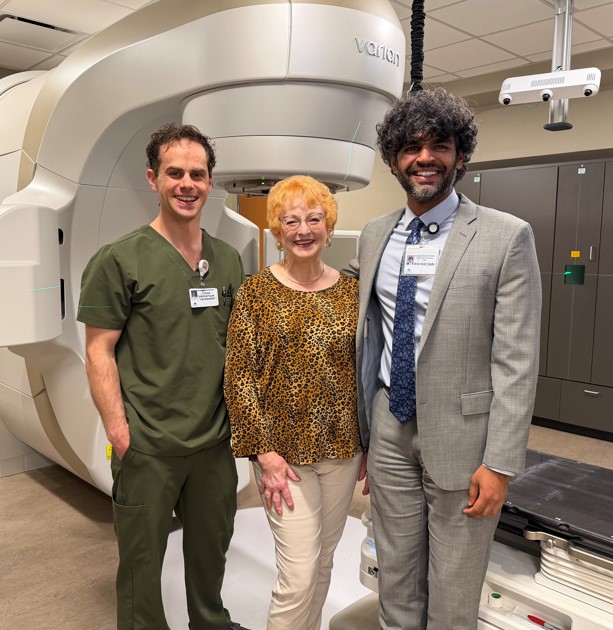
Sharon is one of the first patients at Willamette Valley Medical Center’s H.R. Hoover, MD Cancer Center to receive Low Dose Radiation Therapy (LDRT), a new treatment launched in December 2025 to help people living with painful osteoarthritis.
After more than 20 years of stiffness, swelling, and worsening hand pain, pain that often woke her up at night, she never imagined true relief was possible. Tylenol helped her get through her days, but it didn’t quiet the deep ache at night or restore her ability to use her hands the way she used to. She remembers looking at an old photo with her husband, her hand resting on his shoulder. “That picture,” she recalled. “I remember thinking I needed to hide my hands in all future photos.”
In January 2026, during a follow‑up appointment, her radiation oncologist, Dr. Kanwar, he asked about a note in her chart when she had recently requested a rheumatology referral. When he asked about her symptoms, she described the reality of her condition: limited mobility, significant swelling and pain, and fingers that had become progressively misshapen over the years.
After listening, Dr. Kanwar shared something she didn’t expect, an alternative treatment. LDRT is a noninvasive outpatient therapy that uses a fraction of the radiation used for cancer care, targeting inflammation directly in the affected joints. It helps relieve pain, improve function, preserve future treatment options, and is covered by insurance. Sharon was immediately intrigued and agreed to move forward.
In February, she began a series of six treatments over two weeks. The treatment process itself surprised her. “It was easy, painless, and quick,” she said. “Everyone at the center is so friendly, Chad is the best and so helpful. I was in and out before I knew it.”
What happened next felt nothing short of remarkable. Within a few weeks, Sharon noticed her severe pain fading, especially at night. She no longer relied on Tylenol to get through the day, and she began noticing her dexterity slowly returning. “A little here, a little there,” she said, “Until one day on vacation, I grabbed a deck of cards without thinking and shuffled them. Shuffled! I was so happy. I couldn’t believe it.”
Today, Sharon’s hands continue to improve. She’s able to do the small, everyday things she once loved but thought she’d lost. “To live without pain and return to the things I used to do, I am 100% satisfied,” she said. Sharon regularly encourages friends to investigate this new, life‑changing treatment. “I’m willing to talk to anyone and share my experience. I am really, really pleased.